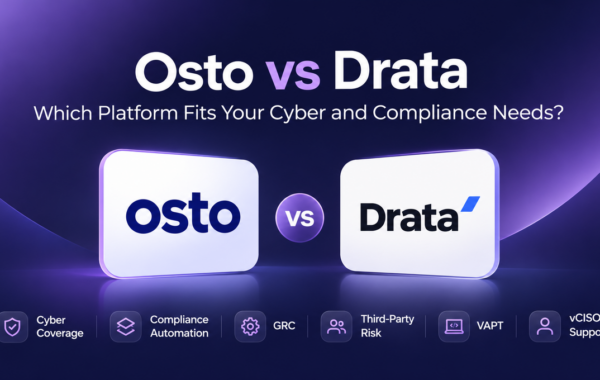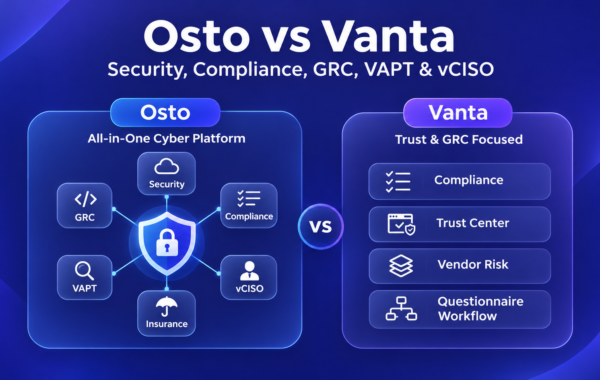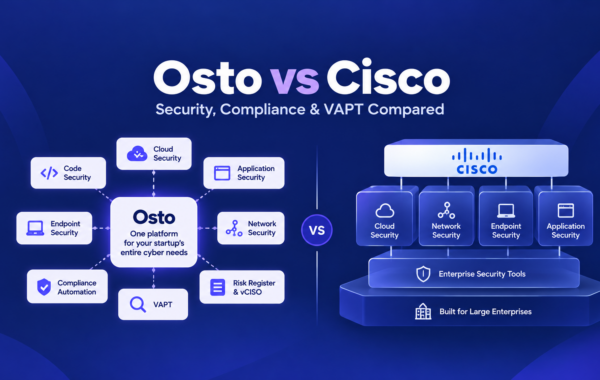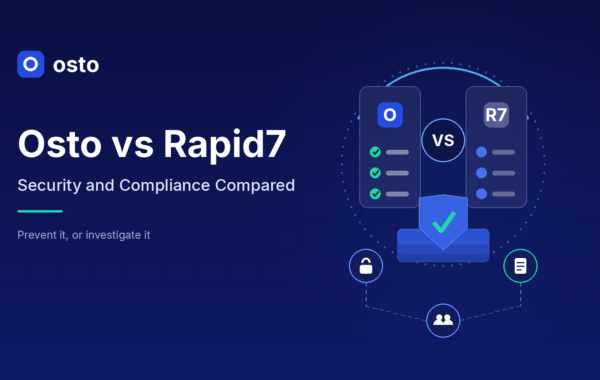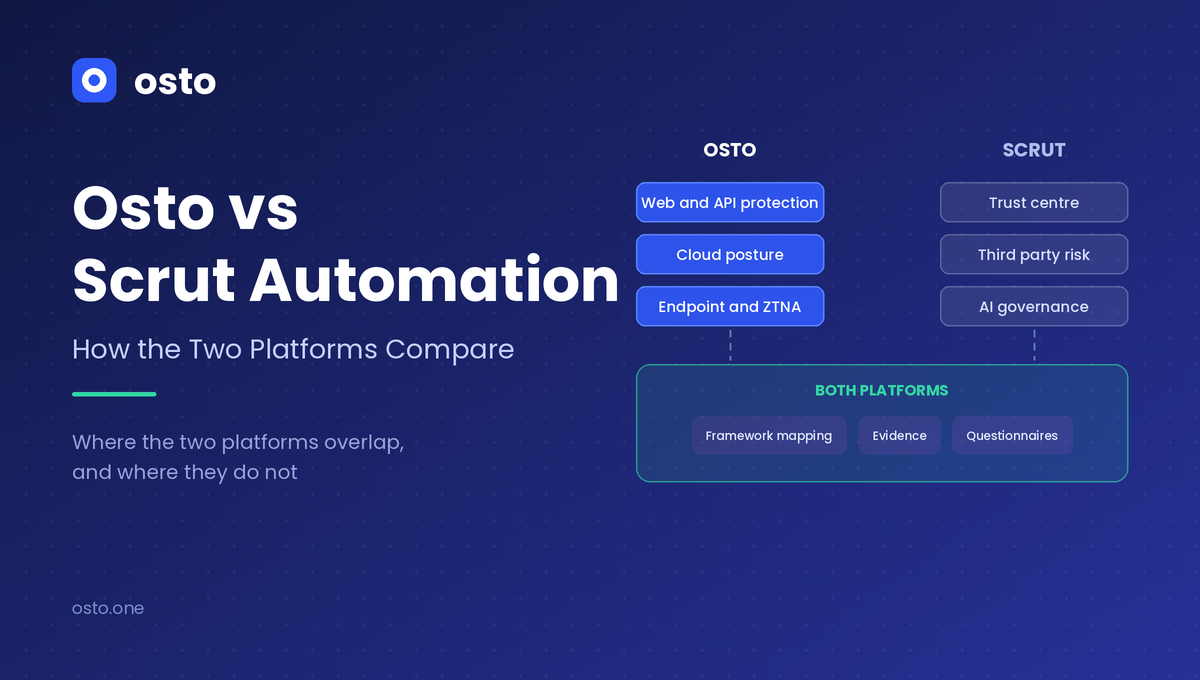
Most growing teams do not need another dashboard. They need fewer gaps between security, compliance, testing and remediation. That is the most useful way to compare Osto vs Scrut Automation when evaluating a GRC platform, compliance automation platform, audit readiness, cloud security and broader cybersecurity coverage. Scrut is primarily built around GRC, risk, audit readiness and trust workflows, with automated cloud security testing and security-assessment capabilities extending the platform beyond traditional compliance operations. Osto also supports GRC-related workflows, but takes a broader approach by bringing security, compliance, VAPT, security questionnaires, cyber insurance access and vCISO support into one platform for startups and growing teams.
Osto vs Scrut Automation: GRC, compliance automation and security at a glance
Scrut Automation is strongest when GRC, risk, audit readiness and trust operations are the main requirement.
Osto is built for teams that want a wider part of their cyber program in one place, from security across cloud, web and API, endpoint, network and code to compliance, GRC-related workflows, VAPT and ongoing security support.
Osto vs Scrut Automation: GRC platform vs one-stop cyber platform
Scrut is mainly a GRC platform
If you already have the security tools you want and your immediate priority is governance, risk, evidence, audit readiness and trust operations, Scrut is built around that job.
Osto is a one-stop cyber platform
Osto also supports GRC, but its broader advantage is that security, compliance, VAPT, questionnaires, cyber insurance access and vCISO support can be managed through the same platform.
Osto vs Scrut Automation: cybersecurity, compliance automation and VAPT
Osto’s strength is the range of cyber work that can sit in one platform. Its current offering includes cloud, application, API, endpoint, network and code security, compliance automation, GRC-related workflows, security questionnaires and human-led VAPT, with vCISO support and cyber insurance access available when needed.
- Cloud: CSPM across AWS, Azure and GCP, with continuous monitoring and remediation guidance.
- Web and API: runtime protection, API discovery, scanning and behaviour-based analysis, with AI used where it adds value rather than as the headline.
- Endpoint and access: antimalware, device and app control, DLP, encryption, screen lock and ZTNA.
- Code: SAST, SCA, SBOM and licence compliance.
- GRC and compliance: control mapping, evidence, monitoring, policies, questionnaires and audit workflows.
- Services around the platform: VAPT, vCISO support and cyber insurance access.
Osto vs Scrut Automation comparison: 7 key GRC and cybersecurity criteria
| Criteria | Osto | Scrut Automation |
|---|---|---|
| Can this replace several tools in our current cyber stack? | Potentially, yes. Osto covers multiple security layers alongside compliance, VAPT and related workflows. | Usually acts as the GRC and trust layer around an existing security stack, though its security-testing capabilities are expanding. |
| Will it help protect the product we actually ship? | Yes. Osto includes web and API protection, cloud posture, scanners and related application-security capabilities. | Provides security testing and assessment capabilities, while runtime application protection is not the centre of its product model. |
| What happens when the platform finds a security issue? | Findings can move into remediation guidance, VAPT workflows and retesting within the broader Osto environment. | Provides remediation guidance and workflows around identified risks and security findings. |
| Does it cover cloud security beyond compliance evidence? | Yes. Osto provides cloud posture across AWS, Azure and GCP with monitoring and remediation guidance. | Yes. Scrut provides automated cloud tests, misconfiguration detection and remediation guidance across AWS, Azure and GCP. |
| Can we run GRC and audit readiness here? | Yes. Osto supports GRC-related compliance workflows, control mapping, evidence, monitoring and audit work. | Yes. GRC, risk, evidence and audit readiness are core strengths of Scrut. |
| Will it reduce the number of vendors we manage? | That is one of Osto’s main advantages for lean teams because security, compliance, VAPT and related services sit together. | It can consolidate GRC and trust workflows, but teams may still operate separate security products underneath it. |
| What if we do not have a large security team? | Osto is designed for lean teams and offers vCISO support when additional security leadership is needed. | Can reduce GRC workload, especially for teams that already have their security stack and ownership model in place. |
Osto vs Scrut Automation: which GRC and cybersecurity platform fits your team?
Scrut Automation may fit when
- Your main priority is GRC, audit readiness, risk and trust operations.
- You already have the security products you want and need a governance layer across them.
- Questionnaires, evidence management and Trust Center workflows are central requirements.
Osto may fit better when
- You want to consolidate security, compliance, VAPT and GRC-related workflows rather than manage them separately.
- You need coverage across cloud, apps, APIs, endpoints, access and code.
- You want security questionnaires, vCISO support or cyber insurance access available alongside the platform.
- Your team is lean and vendor consolidation matters as much as individual features, especially if you are evaluating a Scrut Automation alternative with broader security coverage.
Osto vs Scrut Automation: common questions
Does Osto also support GRC?
Yes. Osto supports GRC-related workflows through control mapping, evidence, monitoring, policies, questionnaires and audit-readiness processes. Governance and risk decisions still remain with the organisation.
Is Osto a Scrut Automation alternative?
It can be. The better fit depends on scope. Scrut is centred on GRC and trust operations. Osto is broader when a team wants GRC and compliance alongside security products, VAPT and related security services.
Do both platforms provide cloud security capabilities?
Yes. Scrut offers automated cloud testing and remediation guidance. Osto provides cloud posture monitoring across AWS, Azure and GCP with remediation guidance connected to its broader security and compliance environment.
Does Scrut provide pentesting?
Yes. Scrut markets agent-driven pentesting with human verification. Osto provides human-led VAPT across applications, APIs, cloud, mobile, source code and other supported assessment areas.
How long does SOC 2 Type II take?
A Type II report requires an observation period. The appropriate period is agreed with the independent CPA firm and commonly runs for several months. Total timing depends on readiness, scope, remediation work and auditor scheduling. For the underlying SOC 2 criteria and reporting resources, refer to the AICPA SOC 2 resources.
Osto vs Scrut Automation for startups: security and compliance in one place
If you are comparing Osto vs Scrut Automation or researching a Scrut Automation alternative, see how Osto combines security, compliance automation, GRC-related workflows, VAPT and ongoing security support for growing teams.